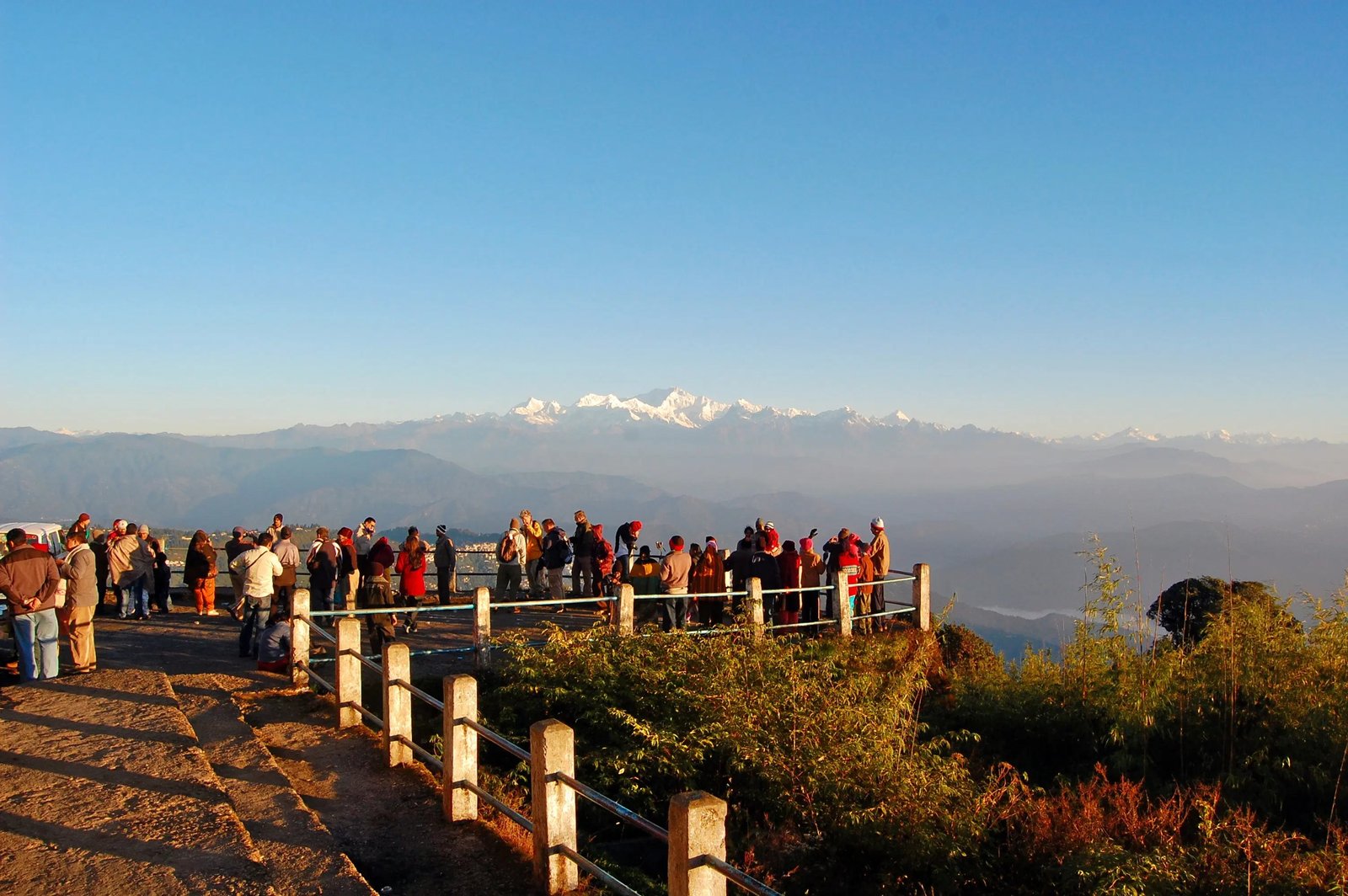
The world’s third-highest peak, Kanchenjunga, dominates the Eastern Himalayas, a work of art. Capturing the “Sleeping Buddha” mountain formation in its golden glory is an unavoidable goal for tourists visiting the Darjeeling Gangtok tour circuit.
To get the ideal shot, though, where do you go? The two famous sunrise locations—Tiger Hill and Tashi Viewpointare included in every Darjeeling Gangtok tour package. Let’s examine which one provides your lens with the best frame.
Darjeeling’s Tiger Hill: The Vast Display
Tiger Hill is the place to go if you want scale, grandeur, and the opportunity to capture two 8000-meter peaks in a single frame.
The Golden Light: Why Photographers Adore It The amazing sunrise is Tiger Hill’s main attraction. The Kanchenjunga massif (Mt. Everest is also visible on very clear days) is illuminated by the sun’s first rays as it rises over the horizon, turning it into a stunning, flaming gold. It’s a real-life mountain-on-fire moment that adds drama and complexity to your photos.
The Sleeping Buddha: From Darjeeling, the mountain range creates the characteristic shape of a reclining Buddha, with the head, body, and feet made up of Kumbhakarna, Kanchenjunga, and Pandim. This is the iconic, well-known view of Kanchenjunga.
The Reality Check (Gear & Crowd): Due to its fame, Tiger Hill is packed. If you want a clean composition with no heads in the frame, you must arrive by 4:00 AM (or earlier in the summer) to guarantee a good spot.
Gear Tip: To compress the distance and make Kanchenjunga appear enormous, bring a telephoto lens (200mm+). In the predawn darkness, a tripod is essential for stability, but keep an eye on the crowd!
Tashi Viewpoint, Gangtok: A Close-Up Look
Moving on to Gangtok, the experience at Tashi Viewpoint is more about a concentrated, up-close view of the Kanchenjunga peaks than it is about a broad panorama. Why Photographers Adore It: Sharper and Closer: Compared to the far-off view from Darjeeling, the mountain appears sharper and more detailed from Tashi Viewpoint because it is closer to the peaks (as the crow flies). You do a better job of capturing the rough texture of the rock and snow. Different Angle: Gangtok’s location to the east gives you a slightly different view of the Kanchenjunga peaks, which stands in stark contrast to the Tiger Hill photographs.
Contextual Elements: You frequently take pictures with prayer flags in the foreground, which gives your image a lively, spiritual touch that firmly anchors it in Sikkimese culture.
The Reality Check (The Town View): Tashi Viewpoint offers a broad view of the surrounding hills and portions of Gangtok, which occasionally appear less “pristine” than the pure mountain shot from Tiger Hill, even though the mountain view is fantastic.
Gear Tip: Since you don’t require Tiger Hill’s extreme reach, a mid-range lens (50–100mm) works well here. For a composition that is rich in culture, concentrate on incorporating those lovely, vibrant prayer flags in the foreground.
The Tour Package’s Verdict
Tiger Hill is the best choice if your goal is to capture the famous, unforgettable “Sleeping Buddha” shot with the striking fire-on-snow effect. However, Tashi Viewpoint is an amazing experience if you value clarity, detail, and a less crowded option that provides a different, sharper perspective of the massif.
Our best recommendation? Do both since you’re purchasing a Darjeeling Gangtok Tour Package! Return home with a full Kanchenjunga portfolio and contrast the golden glow of Darjeeling with the precise sharpness of Gangtok. Just keep in mind that the best time of year for clear skies is from October to early December.
Darjeeling Gangtok Tour Package from Kolkata: A Perfect Himalayan Holiday for First-Time & Repeat Travelers - Kanchan Kanya Signature Holidays
[…] Tiger Hill sunrise view […]